.svg)



EN
EN

It’s your money but you can’t use it because it’s not in your account. We tackle your unpaid invoices without you losing your clients.


.svg)
.avif)
Want to increase your financial capacity to invest and grow? We make sure payments come in on time, so you can focus on your core business.
How do we do that?

Our trained cash flow specialists ensure timely and consistent reminders. As a result, payments remain top of mind with your clients and your money comes in faster.
.avif)
We collect outstanding invoices and ensure that the bond of trust with your client remains intact - also in the long term.
How do we do that?
No ruthless collection practices; we approach your clients in your name in a respectful and solution-oriented manner.
.avif)
Prevention is better than cure. We not only ensure that overdue invoices are paid, but also help you avoid new defaulters.
How do we do that?
Based on 20 years of expertise and 2.4 million records, we use artificial intelligence to predict which clients will become bad payers.
Do you understand all the financial terms? That’s great. For everyone else, we provide a glossary - to make sure we’re all on the same page.
A European standard for bank transfers and direct debits within the SEPA area, making payments faster and easier. Faster is better - as with debt collections.
A reference number that companies use to link an order and invoice to a purchase order, for control and administration purposes.
A Belgian law on the continuity of companies, which temporarily protects companies in financial difficulties from creditors, allowing them to restructure and continue their operations.

We know it might sound ‘too good to be true’, so we don’t expect you to simply take our word for it. Check out our client testimonials.
.svg)

Don’t immediately start to panic. First, calculate it. In one minute, our calculator shows you how much money is really tied up in outstanding invoices. Simple, quick and, in some cases, painfully honest. But it is the first step towards getting a better grip on your cash flow.
Herlinde Vermeulen
Accounting, DC RESOURCES

Hilde Van Wassenhove
Owner D&D Isoltechnics
Raf De Strooper
Finance manager, FLEXPOINT
Bart Wijckmans
Managing Director, WIJCKMANS NV
Guy Roefs
Finance & Administration Manager, SUEZ
Anouk Reekmans
Business Support Controller, Carglass
Sara Sterkmans
Accountant, VVSnv
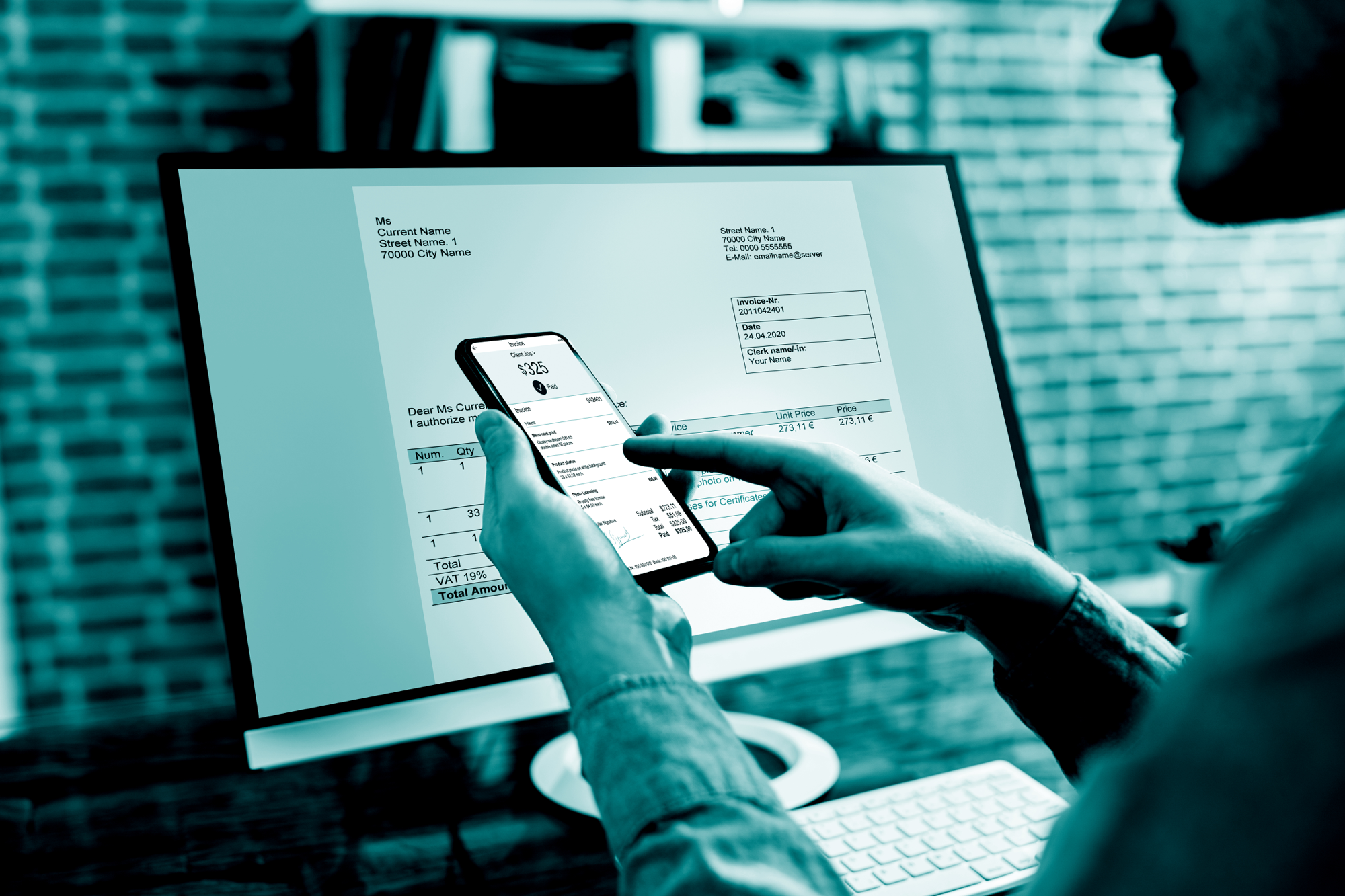
Your supplier charges you too much on their invoice, so you protest that invoice. So do you also have to indicate how much you want to pay? Is it best to pay that part in advance or is it better not to pay anything yet?

A customer does not pay a small invoice. However, you are wary of the costs of a lawyer. So you can't go to court yourself, without the intervention of a lawyer? How do you proceed with this?
No news, good news!
The law states that any undisputed invoice can be considered an accepted invoice and must therefore be paid by the customer. At least if you invoice a company, because different principles apply to invoices to private individuals. However, traders must protest the invoice in question within a reasonable period of time if they plan not to pay it.
Exactly what that reasonable period entails is not specified, but in practice, a period of approximately 2 weeks after receipt of the invoice is considered fair for timely protest (slightly longer for complex invoices).
The dispute can also take place in various ways, for example by registered mail or by e-mail. In any case, it's not a bad thing to mention in your Terms and Conditions how and when customers can protest invoices.
So far the formalities, but what if your customer disputes your invoice?
The fact that you’re here is both good and bad news. Bad, because you have outstanding invoices of which, deep down, you’ve had enough. Good, because we can help you. How? You’ll find out in our demo. No sales pitches, just a no-nonsense explanation of how we can restore the health of your cash flow.
Nearly fell off your chair scrolling through our website and missed the demo buttons? No worries. Send us your question using the form and we’ll get back to you as soon as possible.


.svg)
.svg)