.svg)



EN
EN
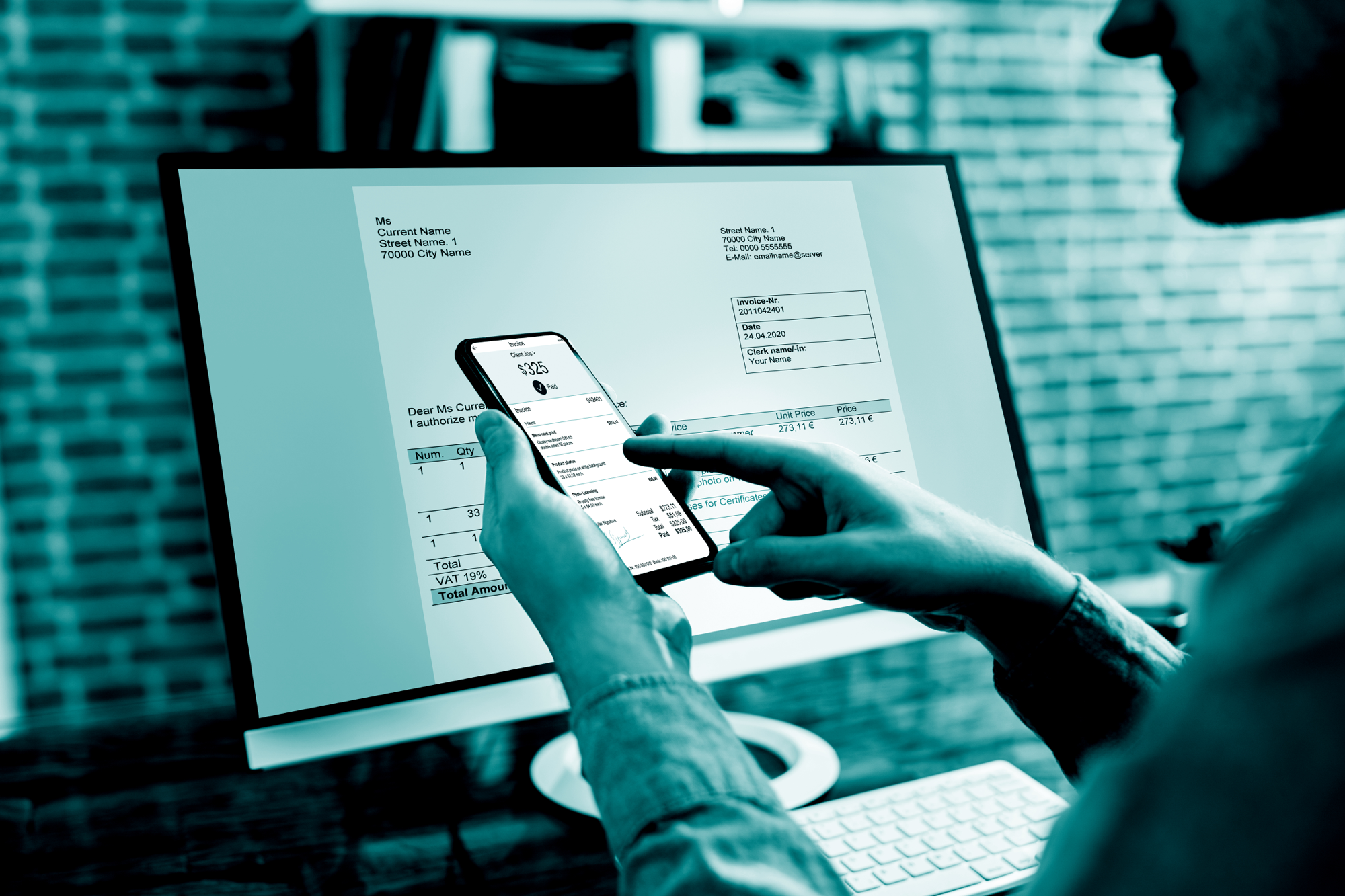
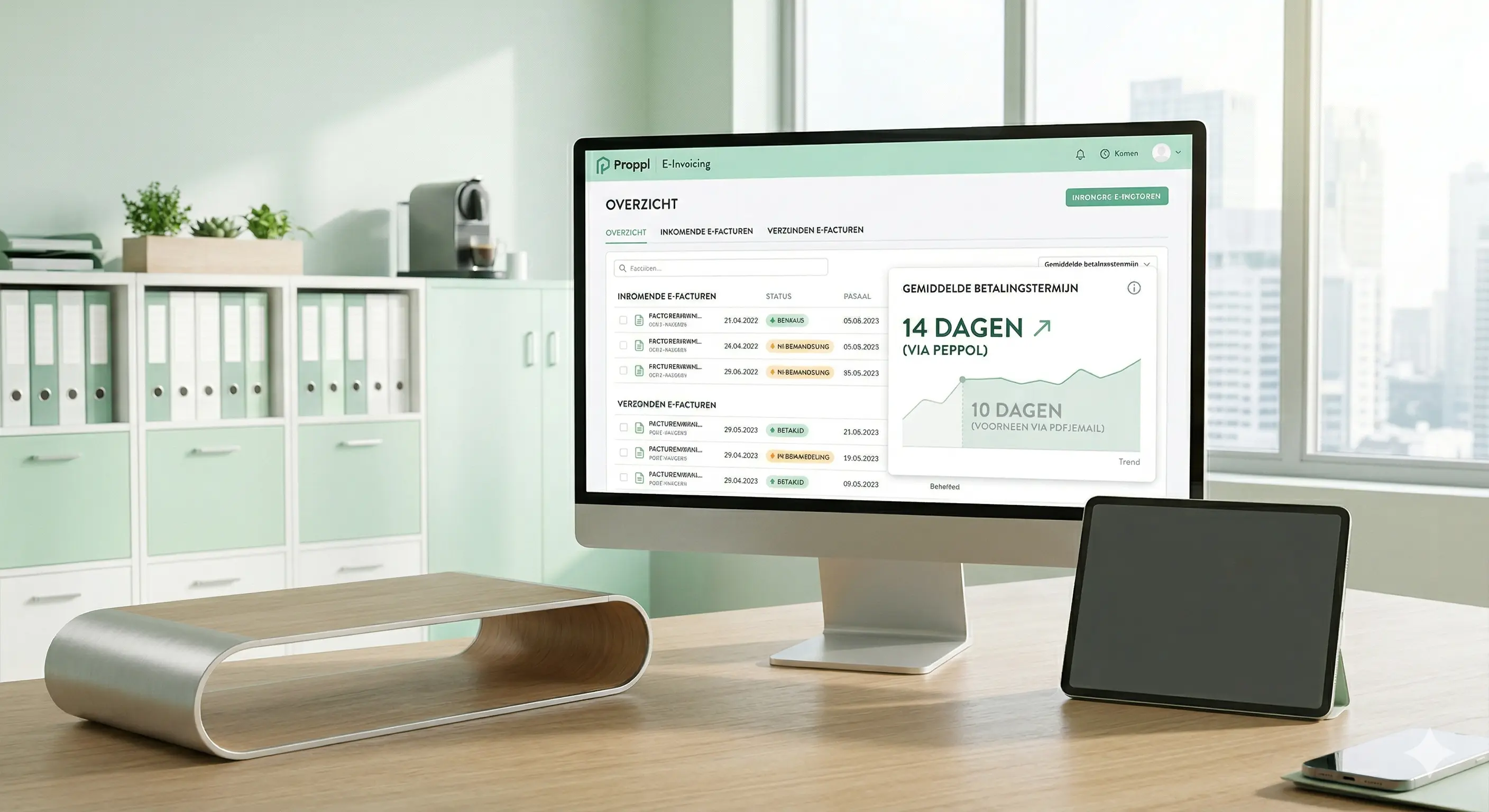
Invoices to other companies may no longer be sent in paper form or as a PDF by e-mail. So they no longer end up in the mailbox. As a result, e-invoices are remarkably often paid late. The period is up to 14 days, compared to 10 days by email.
Every company, no matter how small, is now required to invoice other companies via the Peppol network. Electronic invoicing has been mandatory in Belgium since 1 January for all transactions between companies. This administration must go through the Peppol network, a secure network for exchanging electronic documents. But you must avoid that invoices' disappear 'in a digital mailbox. That's where things are difficult today.
.png)
The software developer Teamleader analyzed the payment behavior of nearly 750,000 outgoing invoices in November and December - before the mandatory introduction of e-invoicing. Around a quarter of them were sent via Peppol. The conclusion: e-invoices are paid slower than invoices via e-mail, with no clear difference between larger or smaller companies. In December, non-Peppol invoices were paid after 10 days according to the median, while e-invoices via Peppol reached a median of 14 days. In November, that difference was even more pronounced. On average, e-mails were paid after 11 days, while Peppol invoices were only settled after 20 days - although 90 percent of those invoices were ultimately paid.
“For SMEs, that is not innocent. According to Teamleader's latest KMonitor (which analyses the financial health of SMEs, ed.), 43.6 percent have less than three months of cash buffer', explains Jeroen De Wit, CEO of Teamleader. The problem is not with the technology - Peppol works fast - but in practice: where does your invoice arrive, do you see it on time, and is there immediate action? Here are five ways to avoid late payments.
1) Make a regular habit of checking your digital mailbox
An email invoice comes directly to your inbox and catches the eye more quickly. “E-invoicing is not failing because of Peppol, but because of habits. Invoices must end up where entrepreneurs work every day. Otherwise, they will stay there, no matter how digital they are. Therefore, schedule fixed checkpoints to check your digital mailbox.
2) Turn on notifications
Let your software warn you when an invoice arrives. This way, you avoid that an invoice has been delivered technically correctly but remains unnoticed.
“We notice that some entrepreneurs are not yet used to working with e-invoicing. Make sure your application sends an email when an invoice arrives. This is easy to set up in most applications. And don't forget to watch,” says Bart Van Coile, the chairman of the Institute of Tax Advisors and Accountants.
3) Check spam
If an entrepreneur receives notifications or reminders via email, spam can ensure that they go unnoticed. It is therefore advisable to regularly check the spam or junk folder and to whitelist the sender domain of the tool used and regular suppliers. In concrete terms, this means: putting the email address on a “white list” so that messages from those senders no longer end up in spam.
4) Designate a responsible person internally
It sounds simple, but it prevents a lot of chaos: agree who follows up incoming invoices, who approves them and who makes the payment. Designate one permanent person responsible for the inbox and provide backup in case of absence.
5) Keep sending reminders
Reminders are not new and do not change substantially due to e-invoicing, whether they are sent via email or paper. Peppol mainly replaces the channel where the invoice is delivered, not the need for follow-up. If you send reminders today in case of late payment, it is well advised to continue to do the same with e-invoices.
.svg)
Your supplier charges you too much on their invoice, so you protest that invoice. So do you also have to indicate how much you want to pay? Is it best to pay that part in advance or is it better not to pay anything yet?
26/05/2025

A customer does not pay a small invoice. However, you are wary of the costs of a lawyer. So you can't go to court yourself, without the intervention of a lawyer? How do you proceed with this?
03/06/2025
-s.jpg)
When you land a large order for a new customer, you naturally want to make sure that payment is made correctly. Under the guise “trust is good, but control is better”, it's best to ask for an advance just to be on the safe side. But is that possible just like that? Are there certain limits that you should respect? And why is it important to explicitly include such an advance in your contracts?
03/05/2025
Nearly fell off your chair scrolling through our website and missed the demo buttons? No worries. Send us your question using the form and we’ll get back to you as soon as possible.

.svg)
.svg)
.svg)